I didn’t think Ninjas were real, just spy’s and sometimes assassins but no one you’d specifically call “ninja”
Ninja is something of an affectation from later eras being backwards projected onto history. However, there were a number of groups that specialized in infiltration, sabotage, assassination, espionage and other “irregular warfare” tactics, often passed down in familial lines. The Iga clan of the Tokugawa period is a notable example.
The general distinction for the historical ninja groups as opposed to someone who just performed irregular warfare (like a guerrilla or a spy), was that the ninja in question had to be a mercenary, operating outside of the feudal hierarchy, and had to be a professional, so no slitting throats as a side-hobby.
Hey, wanna know why the modern idea of ninja is “wears black clothes”?
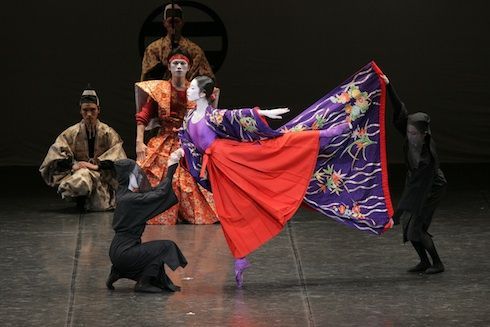
These are “Kuroko”.
Kuroko are men and women fully dressed in black and that wear tabi on their feet. They are Kabuki theater stagehands. When they are on stage, the audience is supposed to ignore them, pretend they aren’t there, as they are “special effects”, not people per se on the stage.
Well, see, some Kabuki plays liked to play with this idea.
In certain plays, a notorious character will suddenly get stabbed by a Kuroko and die. This is shocking to the audience because Kuroko are just straight up not supposed to exist as people or characters in the play, but suddenly, one of these special effects just murdered someone. Then, they’d remove the face covering veil and reveal they were one of the characters all along.
It was a meta manner of narrative, basically. A plot twist, if you will.
That’s why the modern image of Ninja was derived from Kuroko: Unexpected Assassins, striking when no one is supposed to strike, and gone like the wind, just like that.
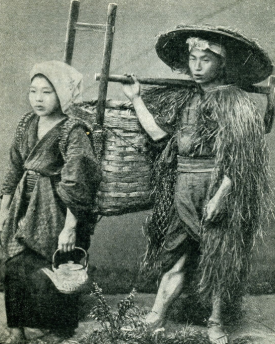
“Ninja” actually looked like this:
Just your regular run of the mill peasant.
That was the entire point.
To not be noticed. To be one with the crowd.
Espionage history !
As both a ninja AND a theater kid- this pleases me
I love the picture from the stage up there – your eyes do sort of just slide right over the Kuroko helping the actress stand and show off.
I’ve seen this concept before and it is SO MUCH better with pictures
A Pennsylvania museum has solved the mystery of a Renaissance portrait in an investigation that spans hundreds of years, layers of paint and the murdered daughter of an Italian duke.
Among the works featured in the Carnegie Museum’s exhibit Faked, Forgotten, Found is a portrait of Isabella de’Medici, the spirited favorite daughter of Cosimo de’Medici, the first Grand Duke of Florence, whose face hadn’t seen the light of day in almost 200 years.
Isabella Medici’s strong nose, steely stare and high forehead plucked of hair, as was the fashion in 1570, was hidden beneath layers of paint applied by a Victorian artist to render the work more saleable to a 19th century buyer.
The result was a pretty, bland face with rosy cheeks and gently smiling lips that Louise Lippincott, curator of fine arts at the museum, thought was a possible fake.
Before deciding to deaccession the work, Lippincott brought the painting, which was purportedly of Eleanor of Toledo, a famed beauty and the mother of Isabella de’Medici, to the Pittsburgh museum’s conservator Ellen Baxter to confirm her suspicions.
Baxter was immediately intrigued. The woman’s clothing was spot-on, with its high lace collar and richly patterned bodice, but her face was all wrong, ‘like a Victorian cookie tin box lid,’ Baxter told Carnegie Magazine.
After finding the stamp of Francis Needham on the back of the work, Baxter did some research and found that Needham worked in National Portrait Gallery in London in the mid-1800s transferring paintings from wood panels to canvas mounts.
Paintings on canvas usually have large cracks, but the ones on the Eleanor of Toledo portrait were much smaller than would be expected.
Baxter devised a theory that the work had been transferred from a wood panel onto canvas and then repainted so that the woman’s face was more pleasing to the Victorian art-buyer, some 300 years after it had been painted.
Christ men have been Photoshopping women to make us more “pleasing” since for-fucking-ever.
Also, Isabella de’Medici is nice looking, but also has that look in her eye of all Medicis: “I haven’t yet decided whether I’m going to kick your ass, buy you and everything you own, or have sex with you. Perhaps all three.”
It’s interesting the way the repaint has photoshop!Isabella affecting a slightly dreamy, docile gaze into the middle distance; she’s dewy-faced and unthreateningly soft. But in the original, she’s looking you right in the eye. She takes the male gaze and throws it right back at you. That’s a face that says go on, tell me I’d be so pretty if only I had a little repaint, I dare you. I’ll fuck you up.
They also made her hand smaller and I can’t tell if that’s an urn or scepter in her hand but considering it was painted out I wouldn’t be surprised if it was a symbol of power.
Oh, it’s a symbol of power alright. She’s a Medici, daughter of Cosimo I de Medici, First Grand Duke of Tuscany. The Medicis were the most powerful political family in Florence for almost forever. In Florence, the lines between politics, crime, warfare, and the Church were very blurry. They even managed, on four separate occasions, to get one of their own family members elected Pope, usually by very underhanded dealing with the cardinals. They had their fingers in every pie in Italy from 13th through 17th century.
In the case of Isabella, in order to secure an alliance with the Orsini family of Rome, she was married to Paolo Giordano I Orsini when she was 16. Contrary to popular belief, people in Renaissance Europe weren’t all that into child brides, this was just about the politics, so she stayed at her father’s household in Florence until she was of appropriate age. And then she just sort of… never left. Her new husband had zero concept of money, and her dad actually kinda hated him even though he was the one who arranged the marriage in the first place. So Isabella and her 50,000 scudi dowry (at a time when the average Italian earned somewhere between 10 and 40 scudi a year)stayed in Florence. Because she never went to Rome to live with her husband, she enjoyed enormous freedom and power back in Florence. After her mother died, she basically stepped into the role of First Lady of Florence, and was considered one of the keenest political minds in Europe. She ruled what she wanted, bought what she wanted, and fucked who she wanted, with no one really able to tell her no.
She was eventually assassinated by her husband while she was on holiday at one of her family’s country villas, probably because she was fucking her husband’s cousin, Troilo Orsini. Well, she had an “accident” while bathing, and Paolo Orsini said she must have drowned, but the coroner said she was strangled, and several servants swore they saw him do it. He might also have done it on the orders of Isabella’s brother, Francesco Medici, since he was trying to consolidate his power as the next Grand Duke, and by all accounts she was definitely in his way because of her political savvy.
So yeah. She was a boss, and that’s what makes it even more offensive that this Victorian sap tried to make her into this passive, skinny, doe-eyed wimp.
oxford was built and operational as a college before the rise of the mayans and cleopatra lived in a time nearer to pizza hut’s invention than to the pyramids being built
I need a noncomprehensive history book that covers Known World History in time periods, like “in this century, all this shit was happening concurrently” and not just all spread out so I have to piece it together like some unpaid uneducated scholar
Mongols were fighting Samurai in Japan and Knights in Europe at the same time.
Star Wars a New Hope came out the same year as the last execution in France by Guillotine.
Abraham Lincoln and Edgar Allen Poe were friends in their early 20′s.
When the Great Pyramids were being built there were areas that still had Woolly Mammoths roaming.
Harvard University didn’t teach calculus in its first few years after being established because calculus wasn’t invented yet.
Nintendo was founded two years after the Eiffel Tower was constructed
This is the book you want: The Timetables of History – going year by year (or in the earlier sections, at least century by century) and showing you what was going on in various parts of the world in several categories (e.g. Politics, Literature, Science, etc.) Super useful for visualizing what events were happening at the same time.





 KayjsCage
You must be logged in to post a comment.